The Benefits of Combining Reiki and Brainspotting for Emotional Healing
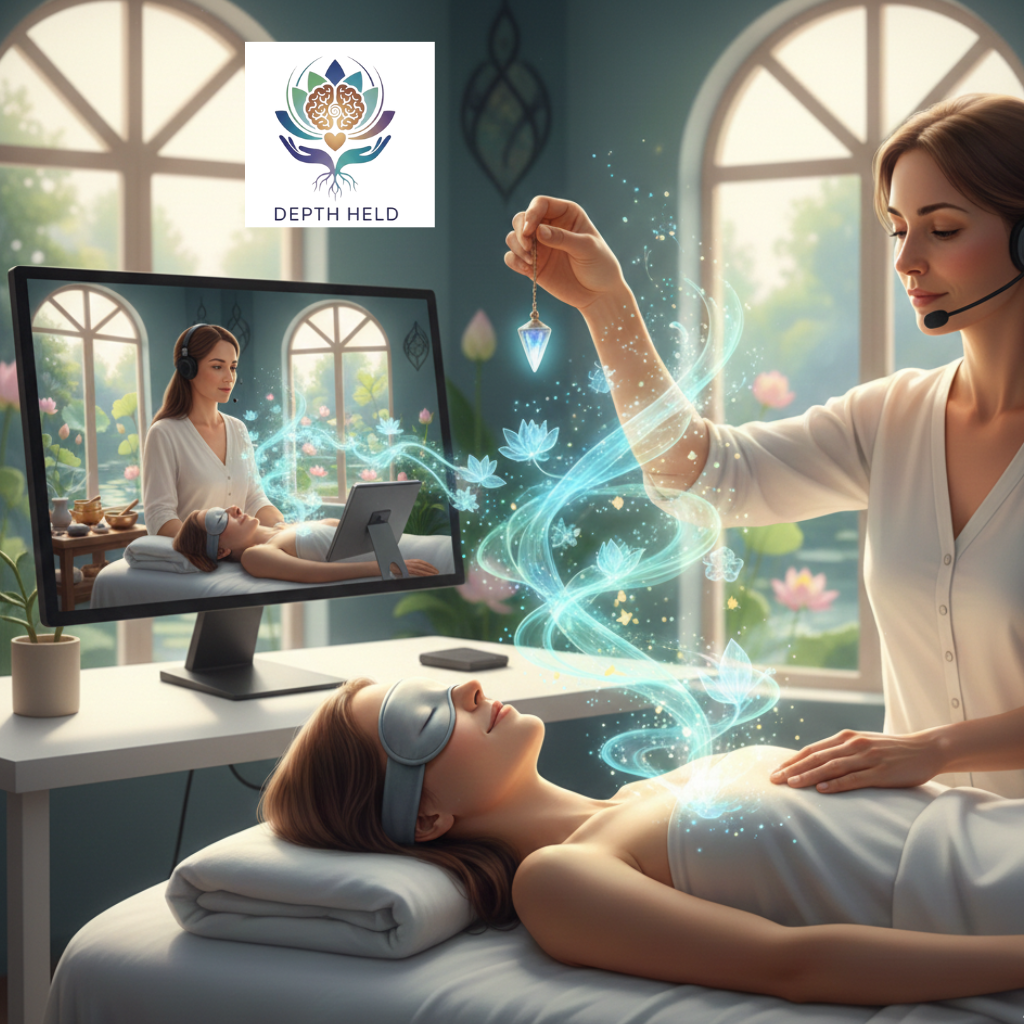
Reiki and Brainspotting for Emotional Healing
When talk therapy isn’t enough, many of us sense that our healing needs to include our body, energy, and spirit - not just our thoughts. Reiki and Brainspotting are two powerful modalities that do exactly that, and together they can offer a surprisingly deep path toward emotional relief and lasting change.
A little about my own journey
My relationship with Reiki started long before I became a seasoned therapist. Back in the 1990s, during my undergraduate internship, I received Reiki while I was also in traditional talk therapy in college. I remember being struck by how quickly Reiki seemed to reach places that words weren’t touching. While therapy helped me understand my patterns and gave me language for what I was going through, Reiki felt like it was penetrating the deeper layers, the places in my body and energy field where those patterns were actually living.
Those sessions felt swifter and more direct, as if something inside me was reorganizing without me having to explain or justify anything. I would walk out feeling clearer, lighter, and more aligned, even when I couldn’t fully articulate why. That early experience stayed with me and continues to shape how I practice now: I know from the inside that energetic and spiritual work can accelerate and deepen emotional healing, especially when it’s paired with solid, trauma‑informed therapy.
What is Reiki?
Reiki is a gentle, hands‑on or hands‑off energy‑based practice that originated in Japan and is now used in many hospitals, cancer centers, and integrative clinics. The idea is simple: a practitioner channels universal life energy through their hands, and that energy “goes where it needs to go” to support balance and healing on physical, emotional, and spiritual levels.
People often describe sensations such as warmth, tingling, waves of emotion, or a deep quiet inside, as if the body finally realizes it has permission to rest. Research on Reiki and other “biofield” therapies shows promising effects on pain, anxiety, stress, and overall well‑being, which is why so many medical settings now offer it as a complementary option.
From an emotional healing standpoint, this matters because a regulated nervous system can actually process emotions, while a chronically activated system is mostly managing emergencies. Reiki helps shift the body out of fight‑flight‑freeze into a calmer, more receptive state where healing can happen more naturally.
What is Brainspotting?
Brainspotting is a trauma‑focused therapy developed from the observation that “where you look affects how you feel.” In sessions, we use specific eye positions, called “brainspots,” to access stored emotional and somatic material in deeper parts of the brain and nervous system. Certain eye positions appear to link directly to networks of memory, emotion, and body sensation; when we hold gentle, mindful attention there, the brain begins to process what has been stuck.
A typical Brainspotting session might look like this:
We identify an issue you want to work on (for example, a trauma memory, anxiety, or a repeating emotional pattern).
We slowly scan your visual field to find a brainspot—an eye position where you notice more activation, emotion, or body sensation.
We stay with that spot while I track your body cues and help you remain within a tolerable window of arousal, allowing your nervous system to process at its own pace.
Emerging research suggests that Brainspotting can reduce trauma symptoms, depression, and anxiety in ways that are at least comparable to other trauma treatments, with some studies showing strong and lasting results. Clients often report feeling lighter, less triggered, and more present after a series of sessions.
How these methods actually lead to emotional healing
Emotional healing is not just about “understanding” our stories; it’s about helping the nervous system and brain reorganize around safety, connection, and meaning. Reiki and Brainspotting both support this reorganization, but they do it from different angles.
Reiki helps calm and regulate the autonomic nervous system, shifting you out of chronic survival mode into a more relaxed, receptive state. In that state, your body can finally process emotions instead of constantly bracing against them. Many people also experience Reiki as spiritually meaningful, which can provide comfort, a sense of being held, and a renewed connection to purpose, all protective factors for mental health.
Brainspotting directly engages the neural and somatic roots of emotional pain and trauma. By holding attention on a brainspot, your brain and body naturally move through waves of emotion, images, thoughts, and sensations, gradually resolving old survival responses. Over time, this can lead to decreased intensity of triggers, less body tension and pain, a greater sense of safety, and more choice in how you respond to life.
When your system is calmer (Reiki) and you’re simultaneously accessing the “stuck” neural networks (Brainspotting), your brain can finally update old patterns in a way that is felt, not just understood.
Why combining Reiki and Brainspotting can feel faster and deeper
Reiki and Brainspotting complement each other beautifully because they work on multiple layers at once:
Energy and spirit (Reiki): addressing the subtle, energetic layer where many people feel heaviness, “bad vibes,” or spiritual disconnection.
Brain and body (Brainspotting): engaging the deeper brain and nervous system structures that hold unprocessed trauma and emotional pain.
Mind and meaning (therapy): naturally opening space for new insights, narratives, and self‑understanding.
In a combined session, we might:
Begin with grounding and gentle Reiki to settle your system and build a sense of safety and spiritual support.
Move into Brainspotting to access and process specific emotional wounds, memories, or patterns while your body stays more regulated.
Return to Reiki during or after the Brainspotting work to soothe, integrate, and “seal in” what has shifted.
Because your body is more relaxed and your energy system feels supported, your defenses often soften. Many clients find that they can reach meaningful emotional shifts more quickly than with talk therapy alone, without forcing, re‑traumatizing, or pushing beyond what feels tolerable.
“Experimental” but not unsupported
Both Reiki and Brainspotting are sometimes labeled “experimental” or “alternative,” and it’s true that they are newer and less mainstream than approaches like CBT. At the same time, they are not simply wishful thinking.
Biofield therapies like Reiki have been studied in randomized controlled trials and systematic reviews, with many studies showing reductions in pain, anxiety, stress, and overall distress beyond placebo.
Reiki is now offered in hundreds of hospitals and medical centers in areas like oncology, surgery, and palliative care, where patients report improvements in pain, fatigue, and anxiety when Reiki is added to standard treatment.
Brainspotting’s research base is newer but growing, with comparative and pilot studies showing reductions in trauma symptoms, depression, and anxiety, and early evidence that the results can be durable over time.
For many people, especially those who feel stuck in traditional talk therapy, this combination of spiritual, energetic, and neurobiological work offers a hopeful and evidence‑informed next step.
Is this approach right for you?
This integrative work may be a good fit if you:
Feel “stuck” in insight‑oriented therapy and sense that the issue lives in your body or energy field.
Are drawn to spiritual or energetic work but also want a grounded, trauma‑informed, brain‑based method.
Have a history of medical or complex trauma and need gentle, titrated ways to go deeper without re‑traumatizing.
Are curious about Reiki or Brainspotting and want to experience them in a safe, attuned therapeutic relationship.
If you’re feeling called to explore this kind of multidimensional healing - where mind, body, brain, energy, and spirit are all welcome, I’d love to talk with you about what this could look like in your life. You’re invited to reach out, ask questions, or schedule a consultation to see whether this approach feels like a match for your needs right now.
References (brief selection):
D’Antoni, F., Matiz, A., Fabbro, F., & Crescentini, C. (2022). Psychotherapeutic techniques for distressing memories: A comparative study between EMDR, Brainspotting, and body scan meditation. International Journal of Environmental Research and Public Health, 19(3), 1142.
Jain, S., & Mills, P. J. (2010). Biofield therapies: Helpful or full of hype? A best evidence synthesis. International Journal of Behavioral Medicine, 17(1), 1–16.
Miles, P., & True, G. (2003). Reiki—Review of a biofield therapy: History, theory, practice, and research. Alternative Therapies in Health and Medicine, 9(2), 62–72.
Thrane, S., & Cohen, S. M. (2014). Effect of Reiki therapy on pain and anxiety in adults: An in-depth literature review of randomized trials. Holistic Nursing Practice, 28(5), 297–306.
Yang, J., Wu, Q., Zhu, J., Jiang, M., & Zhang, H. (2024). Therapeutic effects of Reiki on interventions for anxiety: A systematic review and meta-analysis. Medicine, 103(24), e38206.